Information Gain Is the Real SEO Moat: Why Google Rewards Expert Content
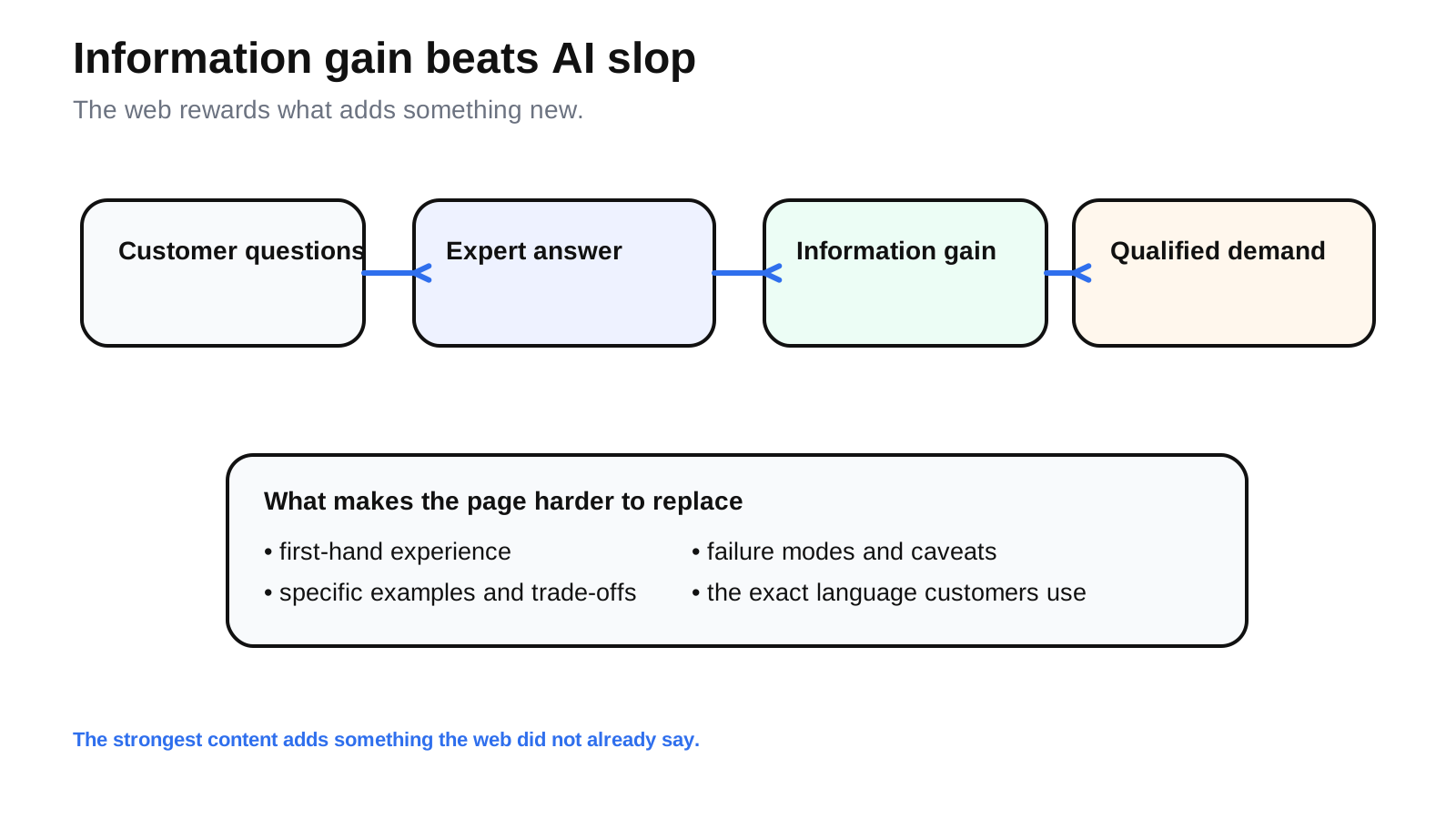
Matt Diamante's newsletter makes a useful point: search and AI systems are rewarding information gain—content that adds something the web did not already say.
That is a more practical rule than "publish more." If a page is just a polished rewrite of existing advice, an AI model can usually compress it into a few generic sentences. If the page contains first-hand experience, a specific process, or a hard-earned example, it becomes much harder to replace.
What information gain means in practice
Information gain is not novelty for its own sake. It is the amount of useful, non-obvious value a reader gets from your page compared with the pages they have already seen. In consulting, that usually comes from details that only show up when you have actually done the work.
Those details include client questions, implementation constraints, decision trade-offs, failure modes, and the language customers use before they have a framework for the problem.
- Customer language: the exact wording people use when they are confused.
- Operational detail: what happens first, what breaks, and what gets delayed.
- Decision support: what leaders need to decide and what they can safely ignore.
- Trade-offs: what is lost when one approach is chosen over another.
Why AI slop loses
Generic AI content tends to flatten all of that. It produces a clean surface, but no real signal. That matters because readers can feel the difference, and so can ranking systems that are increasingly trained on user satisfaction, source quality, and contextual relevance.
There is also a branding cost. Generic content teaches the market that your firm sounds like everyone else. Expert content does the opposite: it proves you have a point of view and a reason to exist.
A repeatable process for a consulting team
- Start with the ten questions your customers keep asking.
- Interview the person who actually solves the problem.
- Write the answer as if you were explaining it to one client on a call.
- Add examples, caveats, and the thing you wish every buyer understood earlier.
- Trim only after the page is useful, not before.
This is where AI can help, but only as a tool for structuring and editing. It should not be the source of the insight. Use it to interview you, organize notes, and improve clarity. Do not use it to invent the substance.
What to measure
Do not measure this work only by pageviews. Measure repeat visits, qualified inbound leads, branded search, citations, and whether sales conversations sound easier because the prospect already understands your viewpoint.
If the content is doing its job, it will show up in fewer but better conversations. That is usually the better business result.
Limits and counterpoints
Not every page needs to be long. Service pages, FAQs, and reference pages still need to be concise. Information gain is about relevance, not verbosity.
The real test is simple: after reading the page, does the buyer know something they did not know before, and do they trust you more because of it?
Source note: This article is based on a Matt Diamante newsletter about information gain and SEO. The point is directionally useful, but it is not an official Google statement.
