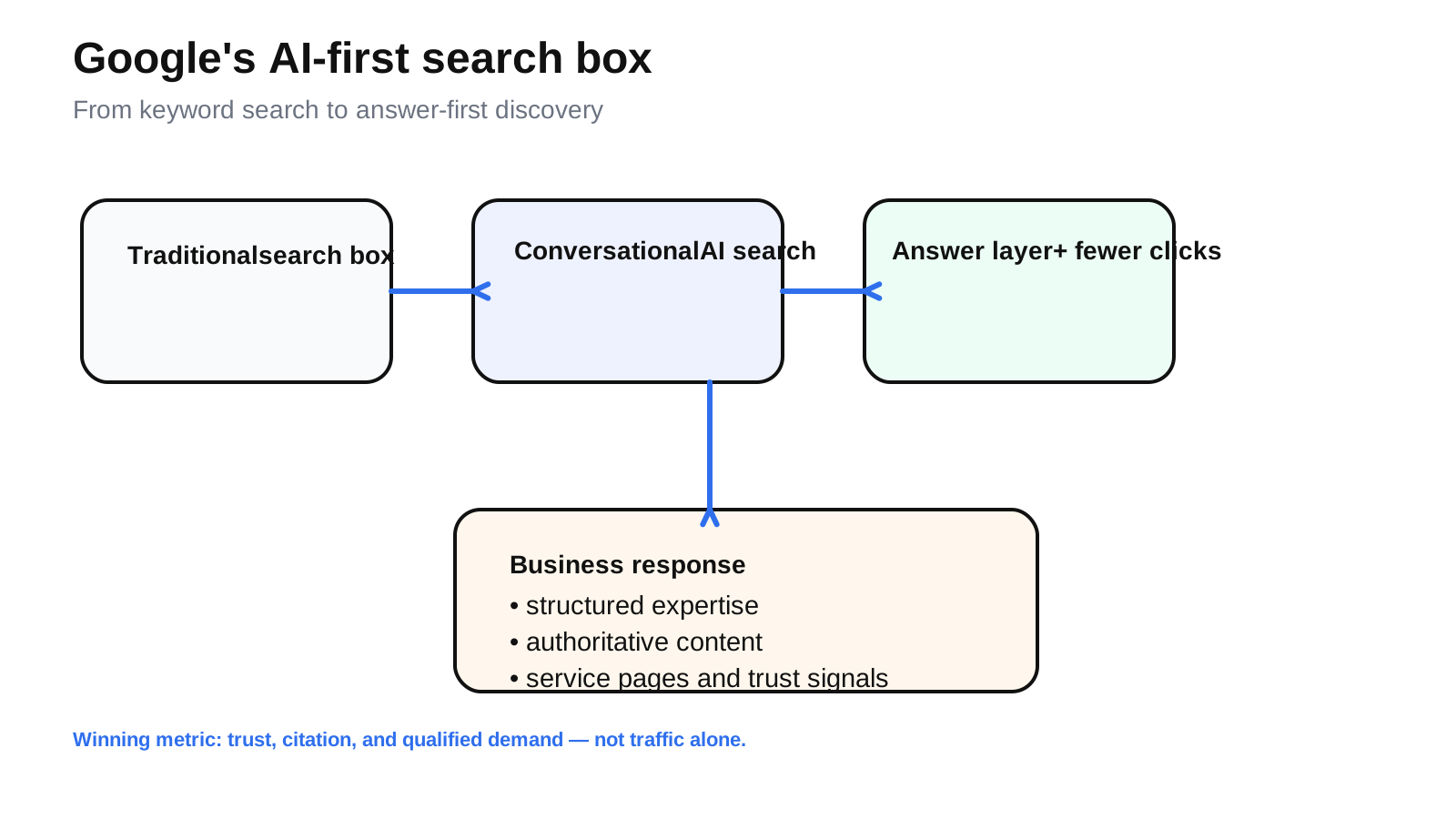
Google’s Move Toward an AI-First Search Box: What It Means for SEO and Consulting
Search is moving from “find me a link” toward “give me the answer.” The source newsletter frames this as a dramatic Google change, but the business signal is more important than the exact product label: users are asking longer, more specific questions, and they increasingly expect the interface to do some of the thinking for them.
That creates a zero-click risk for some sites. But it also creates a trust opportunity for firms that can present clear, structured expertise. If an AI system chooses your content, it is effectively saying your answer is useful enough to surface.
What changes when search becomes answer-led
Traditional SEO assumed the click was the prize. In an answer-led interface, the click may still happen, but it is no longer the only sign of value. The user may discover you in the answer layer, compare your thinking to others, and only then visit your site—or not visit at all.
That means the content itself must work harder. It needs to be easy to quote, easy to summarize, and easy to trust. A page that merely repeats keywords will struggle. A page that answers a business question directly, with depth and structure, is much more likely to be reused by both humans and machines.
What SEO teams should do now
- Write for a specific question. Each page should solve one real decision or problem.
- Use a clear hierarchy. Headings, definitions, examples, and short summaries help both readers and AI systems.
- Show evidence. Specific examples, trade-offs, and implementation details make trust easier to earn.
- Measure beyond traffic. Watch qualified leads, branded searches, and assisted conversions.
What consulting firms should do now
Consulting businesses are not just competing for clicks. They are competing to be the answer that a buyer sees before they ever start a formal conversation. That means service pages, case studies, and thought pieces should work together.
Every serious consulting article should connect the topic to a business outcome: better governance, faster execution, lower risk, stronger operating discipline, or clearer decision-making. If the article does not lead somewhere practical, it may still attract readers but fail to support the business.
Limits and counterpoints
Not every query becomes zero-click, and not every search is affected equally. High-intent, local, and transactional searches still often lead to visits. The bigger shift is that search is becoming more selective about what it surfaces and what it answers directly.
That is why the right response is not panic. It is better positioning. If you publish clear expertise, you can benefit from the answer layer even when the click count goes down.
Conclusion
The practical takeaway is simple: make your expertise easy to find, easy to trust, and easy to reuse. In an AI-first search environment, the firms that win are not the ones that shout the loudest. They are the ones that answer the real question most clearly.
Source note: This article is based on a newsletter/marketing message. It is directionally useful, but it is not an official Google statement.
Deep Dive
Risk Management for AI-First Search Transition
A comprehensive risk management framework for CTOs navigating Google's AI-first search transition. Includes detailed risk registers, mitigation strategies, and implementation playbooks.
Explore the Deep Dive →