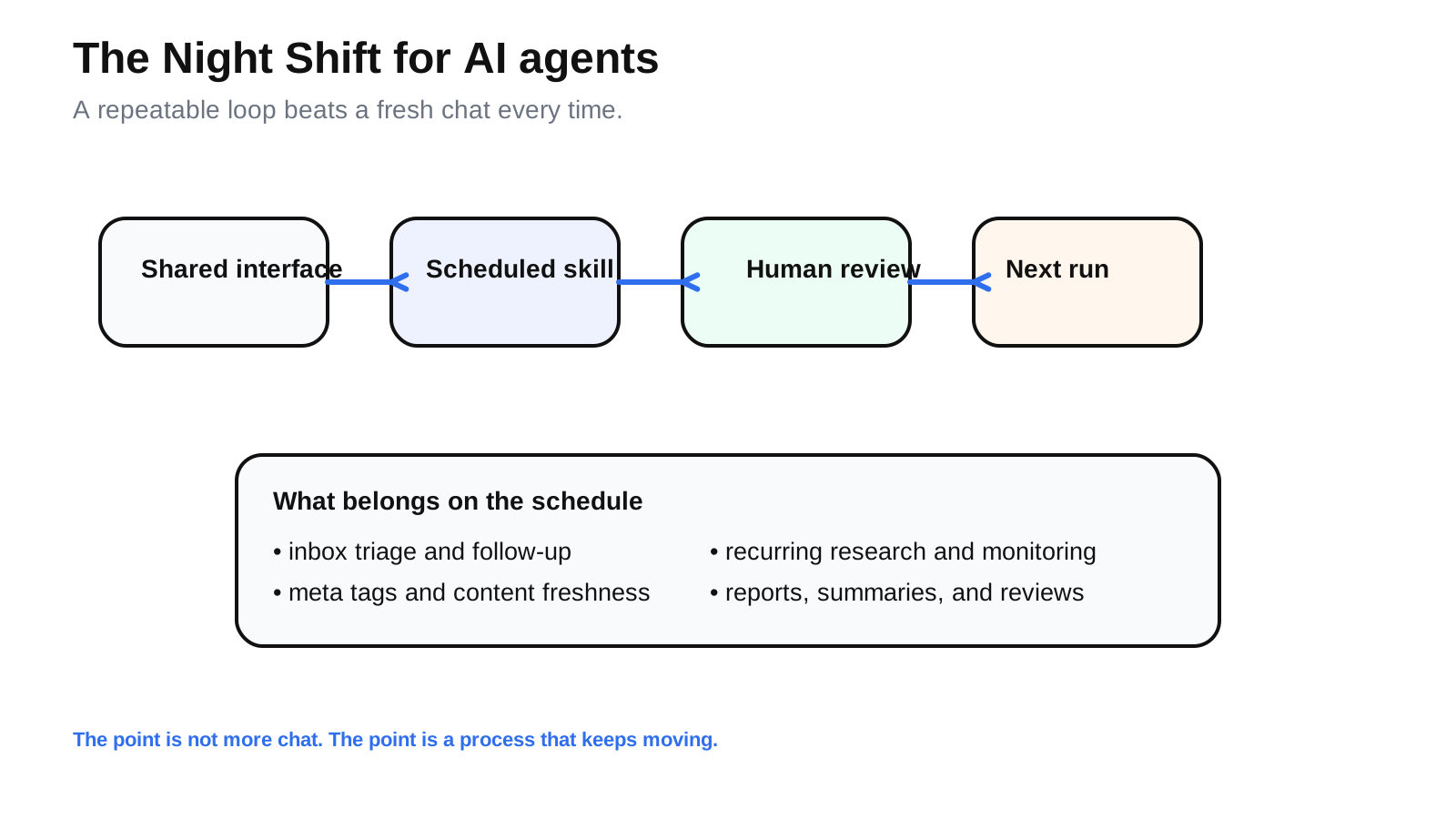
The Night Shift for AI Agents: How Scheduled Work Creates Real Operational Leverage
The useful part of Brian Casel's "Night Shift" idea is not the branding. It is the operating model: recurring work should not require a fresh chat every time. It should run on a schedule, with shared state, a clear handoff, and a human review point.
That is a different way to think about AI. Instead of asking a model to help when you remember to open the chat, you design a loop that keeps moving even when you are not there.
Why chat-only workflows stall
Chat is excellent for exploration and one-off thinking. It is weak for recurring operations. The moment a task repeats, the workflow starts leaking time: you have to restate the context, re-upload the same files, and remember what "done" meant last week.
That is why so many promising AI automations stall after the first proof of concept. They are not actually systems; they are conversations.
The three parts of the Night Shift
- A shared interface. One place where the task state lives: a document, dashboard, ticket, or app.
- A human in the loop. Short review sessions where someone approves, corrects, or escalates.
- An agent on a schedule. A skill or workflow that wakes up, checks the state, and moves the work forward.
When those three pieces work together, the agent can pick up where it left off instead of starting over.
Good candidates for the Night Shift
- inbox triage and follow-up
- meta tags and content freshness checks
- weekly research and monitoring
- reports, summaries, and recurring reviews
- support tickets and vendor follow-up
The pattern works best when the task is recurring, bounded, and reviewable. It is not a good fit for ambiguous work that could create irreversible damage if it runs unattended.
What teams should standardise
If you want this to work in a business, document the interface, the success criteria, the approval rules, and the escalation path. If the agent fails, the failure should be visible and easy to recover from.
That is the real benefit of the Night Shift model: it turns AI from a helper you remember to use into a process that behaves like a reliable teammate.
Limits and counterpoints
Some work should stay human-led. Some work needs judgment before automation. And some processes are not ready because the underlying input is too messy. The answer is not to automate everything; it is to automate the right recurring work.
Source note: Based on Brian Casel's Builder Methods newsletter and video about the Night Shift model.
