OpenClaw Starter Kit: Building a Team of AI Agents That Runs Every Day
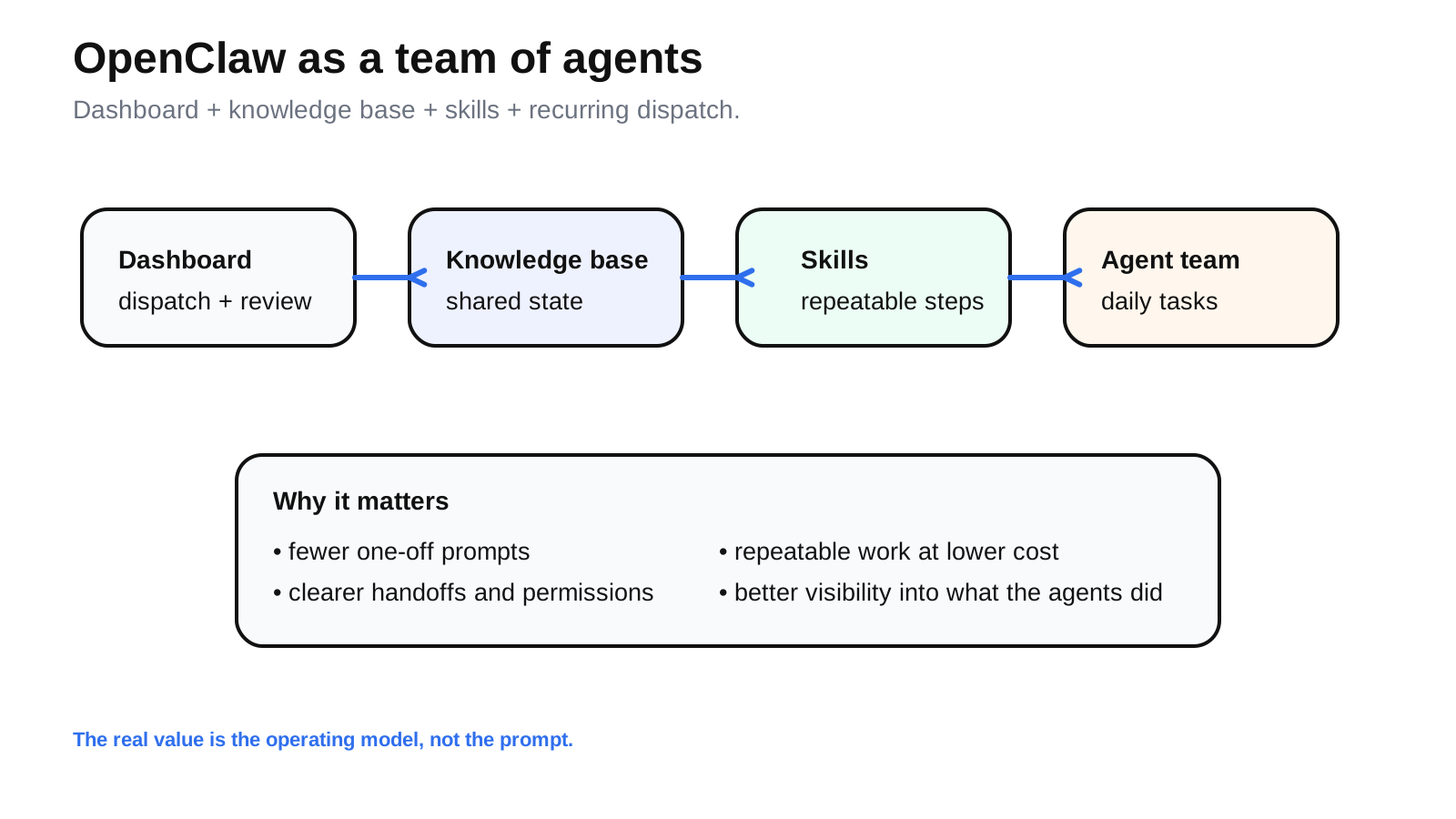
Brian Casel's OpenClaw Starter Kit is interesting because it treats multi-agent AI as an operating system, not a prompt trick. A team of agents runs against a dashboard, a knowledge base, and a set of skills that define how work gets dispatched and reviewed.
That matters for companies because "we have an agent" is not a strategy. A strategy is a repeatable system: who the agents are, what they can touch, how their work is scheduled, and where the human review happens.
What OpenClaw actually bundles
- machine setup and environment configuration
- multi-agent roles, workspaces, and model assignments
- a custom dashboard for task scheduling and dispatch
- a structured knowledge base and shared context
- skills and workflows that turn vague delegation into repeatable work
The value is not only the tools. It is the structure. The dashboard defines the control plane, the knowledge base keeps context shared, and the skills turn vague delegation into steps that can be repeated.
Why that matters in practice
Many teams want the output of a multi-agent system but never define the rules that make it safe. They let agents improvise. OpenClaw points in the opposite direction: make the workflow explicit first, then automate it.
That is especially important when work is repetitive, cross-functional, and easy to overlook if nobody is tracking it. The system should not depend on one person remembering every step.
What to standardise before scaling
- Clear roles and permission boundaries.
- Where state lives and how updates are recorded.
- Which model or tool handles which task.
- When the agent can act automatically and when it must ask.
- How the team reviews failures, exceptions, and drift.
If you cannot explain the system to a colleague in five minutes, it is probably not ready to scale. The starter kit is useful because it forces that explanation early.
Good first use cases
- research and monitoring
- content maintenance and refresh
- support triage and follow-up
- weekly summaries and KPI notes
- repeatable internal operations that still need human review
Those jobs are repetitive enough to benefit from a system, but still valuable enough to justify oversight.
Limits and counterpoints
Not every process needs a fleet of agents. Some work is cheaper and safer with a single assistant or a traditional workflow tool. The value of OpenClaw is in the cases where coordination, state, and repeatability matter.
Source note: Based on Brian Casel's Builder Methods and OpenClaw material and product pitch.
