False Alignment on Teams: Why Consensus Is Not Commitment
When change efforts stall, leaders often assume the strategy is wrong. More often, the problem is subtler: the team sounded aligned, but never became committed. People nodded. Few challenged the plan. The meeting ended. Then the work slowed down.
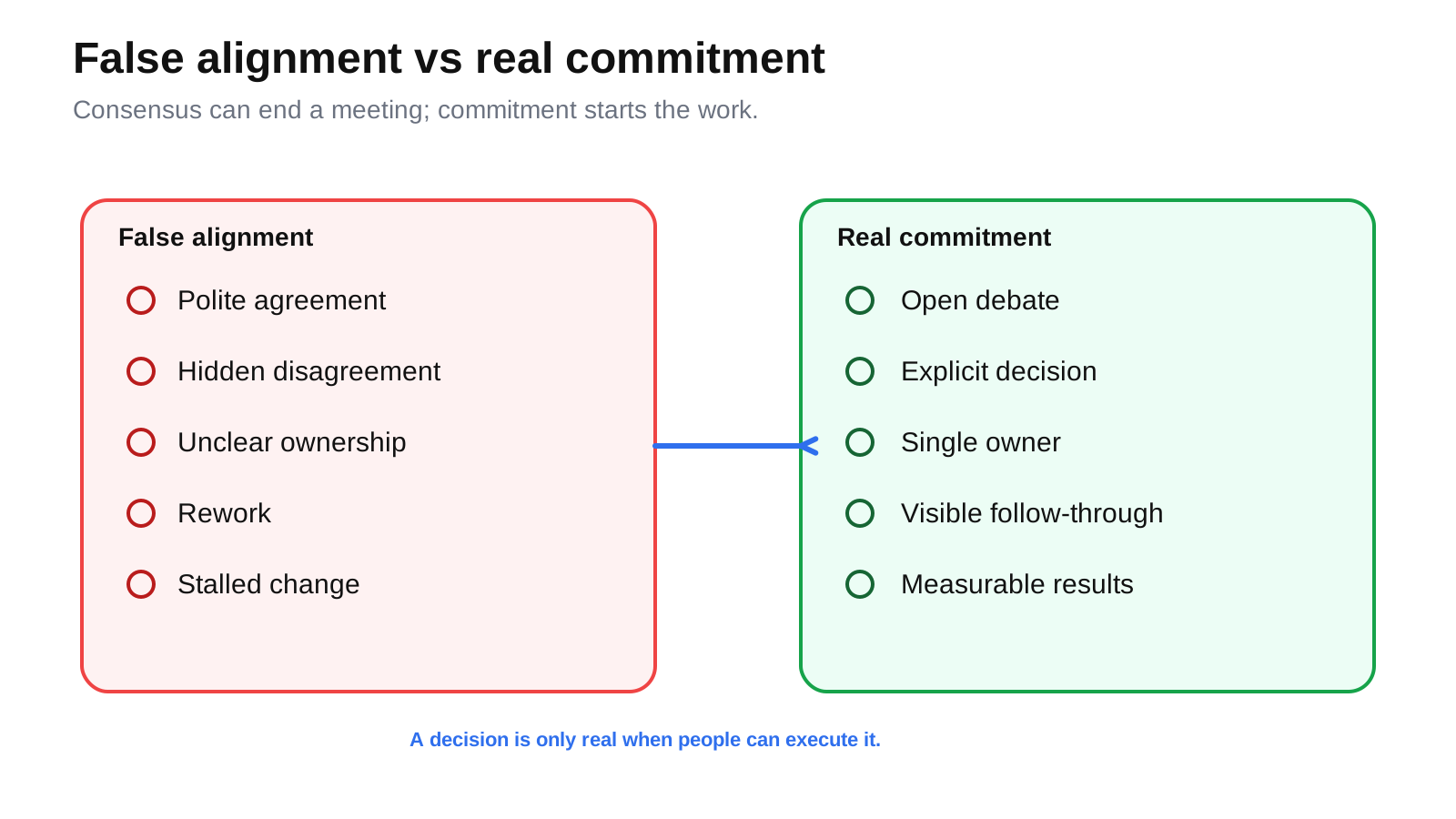
This is false alignment: the appearance of agreement without the operational reality of commitment. It happens when teams avoid difficult debate, leave decisions vague, or confuse silence with buy-in. In the moment it feels efficient. In practice it is expensive, because the organization pays twice—once in the meeting, and again in rework, delays, and missed follow-through.
What false alignment looks like
False alignment is easy to feel and hard to name. The meeting looks calm, but the next week reveals that different people heard different decisions. Common signals include private objections after the meeting, no clear owner for the next step, repeated reopening of the same topic, and quiet resistance during execution.
In other words, the team looks aligned at the level of tone, but not at the level of action.
Why teams fall into the trap
There are good reasons this happens. People want to be respectful. They want to keep momentum. They may be tired, under pressure, or unsure whether dissent will be welcomed. In some organizations, disagreement has been punished in the past, so people learn to stay quiet.
Other times the issue is structural. Decision rights are unclear. Meetings mix debate, decision, and status reporting into one hour. No one closes the loop. Or the leader asks for input but makes the final call without explaining the logic, so the team never knows whether it is supposed to commit, compromise, or simply comply.
Consensus is not commitment
Consensus means people broadly agree. Commitment means people will act, even if the decision was not their first choice. A team can disagree on the best option and still commit to one decision once it is made.
This matters because many changes do not fail at the idea stage. They fail in the handoff from discussion to action. If the team only achieved polite consensus, the leader may get short-term harmony but long-term drift. If the team achieved real commitment, the organization gets speed, clarity, and accountability.
How leaders turn agreement into commitment
- Separate debate from decision. Do not let one meeting do everything.
- Close with three questions. What did we decide? Who owns the next step? By when will we know whether it is working?
- Write the decision down. Capture the owner, deadline, and key trade-off.
- Make dissent safe. Ask for the strongest counterargument and reward clarity over politeness.
- Track execution, not just agreement. Missed deadlines and reopened decisions are the fingerprints of false alignment.
Limits and counterpoints
Not every decision should be made through broad debate. In a crisis, a leader may need to decide quickly and ask for disciplined execution. In low-stakes, reversible choices, consensus can be efficient. And in some teams, too much debate becomes a form of procrastination.
The answer is not endless discussion. The answer is the right kind of discussion at the right time, followed by a clear decision and disciplined execution.
A practical 30-day reset
- Review the last ten important decisions and check whether each one had a named owner, a deadline, and a written record.
- Add a two-minute commitment check to recurring leadership meetings.
- Ask someone to restate the decision and the next action in their own words.
- Track how often decisions are reopened because they were unclear the first time.
- Separate one forum for debate from one forum for execution.
If you do only one thing, make the hidden assumptions visible. False alignment survives vagueness. Commitment grows when decisions become explicit, ownership becomes visible, and follow-through becomes a habit.
