Turning Fetal Brain Signals into a Real-Time Clinical Interface
Intrapartum fetal monitoring is still dominated by proxy information. The clinical team watches patterns in fetal heart rate, contraction timing and maternal context, then interprets whether the fetus may be compensating, decompensating or simply showing a benign pattern that looks worrying on a trace. That approach has saved lives, but it also leaves a structural gap: the organ we most want to protect is the brain, while the signal we most often measure is cardiac.
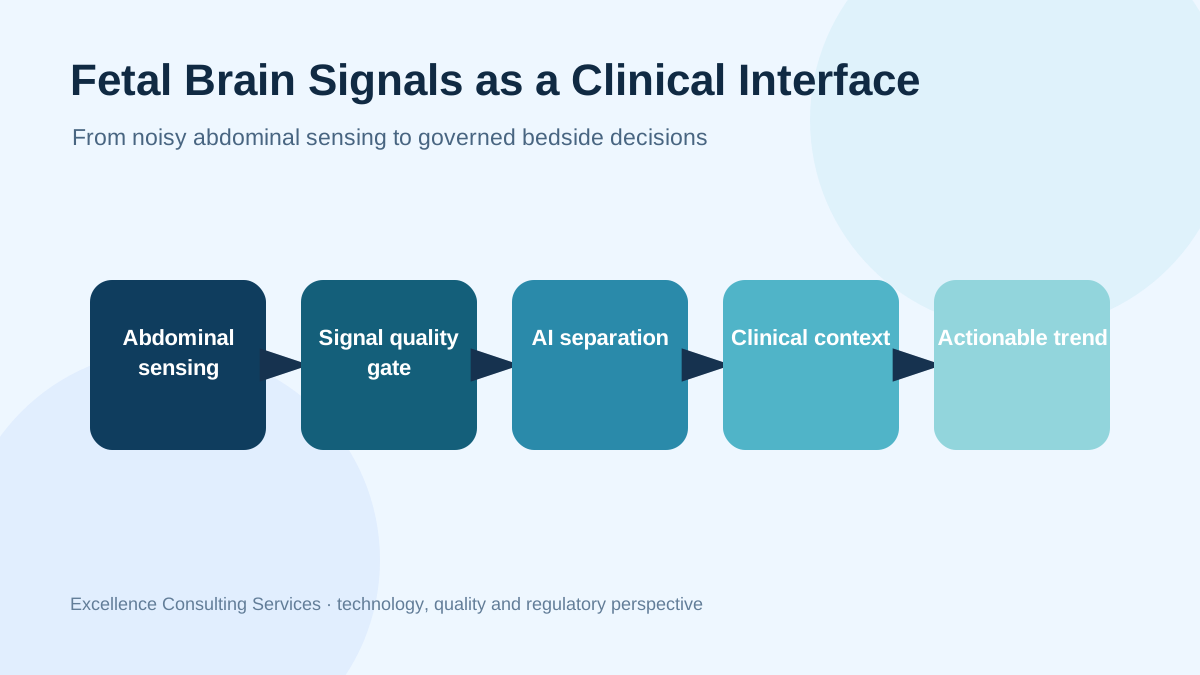
The emerging technology idea is therefore simple to state and difficult to execute: capture fetal brain electrical activity non-invasively from the maternal abdomen, separate it from maternal and environmental noise, and turn it into an interpretable real-time clinical interface. If this category matures, it could give obstetric teams a more direct view of neurological status during labour. The benefit would not be a magic alarm. The benefit would be better information at the moment where minutes matter and over-reaction also carries harm.
Why the clinical problem is not just detection
Conventional fetal heart-rate monitoring is intentionally cautious. It is designed to avoid missing fetal compromise, but that caution produces ambiguous traces and false-positive concern. In many labour wards, the practical consequence is a familiar tension: intervene early and accept unnecessary operative delivery, or wait and risk missing a deterioration pathway that could injure the brain. Published debates around cardiotocography have repeatedly shown that interpretation variability, category drift and defensive decision-making are not edge cases; they are normal operating conditions.
A brain-signal interface would need to improve this situation without creating a different version of the same problem. If the signal is unstable, opaque or presented as an unqualified risk score, it will not improve clinical judgment. It may only add one more waveform that staff learn to distrust. The target state should be narrower and more disciplined: show whether the measured neural signal is technically adequate, show which features are changing, show how those changes relate to predefined clinical hypotheses, and preserve the clinician’s authority to decide.
The architecture: sensing is only the first layer
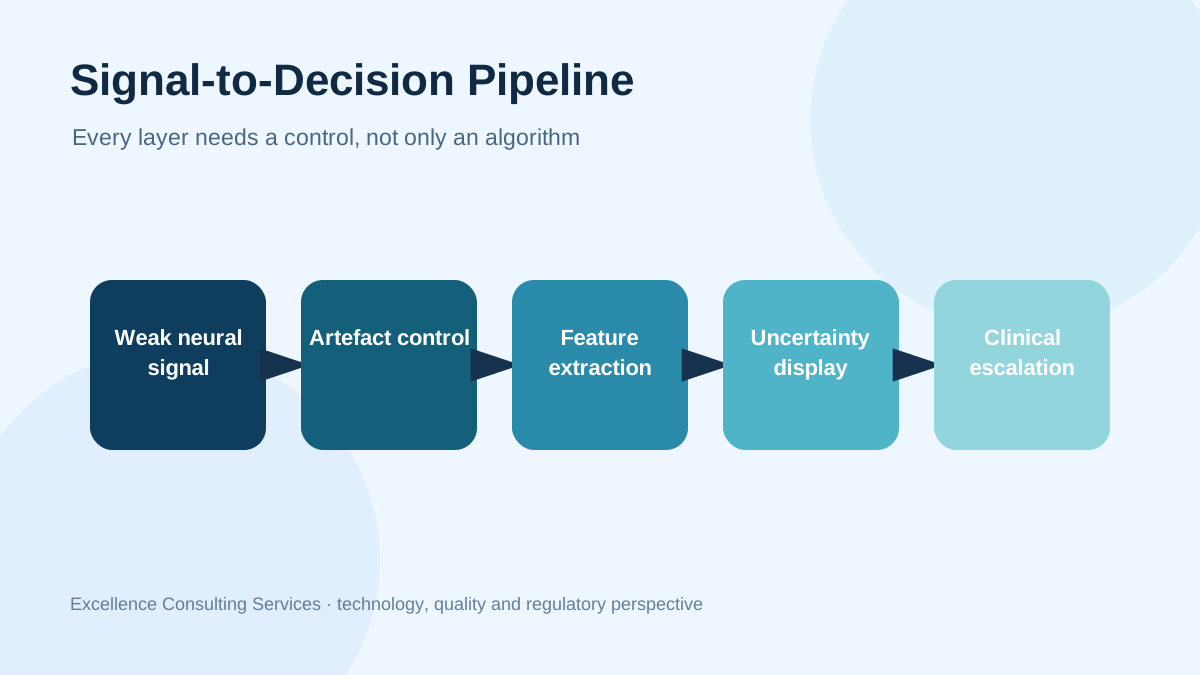
The visible part of such a system would be simple: abdominal sensors, a bedside display and integration into the labour workflow. The real architecture is deeper. It starts with acquisition of very small electrical signals in a noisy environment. Maternal muscle activity, maternal ECG, fetal ECG, uterine contractions, movement, electrode-skin impedance, power-line interference and staff handling can all contaminate the data. The fetal neural signal, if present, is not politely separated for the algorithm.
That means the technology stack must include acquisition controls, analogue and digital filtering, artefact detection, source separation, feature extraction, model inference and user-interface logic. Each layer should have a quality gate. For example, the interface should distinguish between “possible neurological change” and “signal quality too poor for interpretation”. This distinction is not cosmetic. A clinical user must know when the system is providing information and when it is asking to be ignored until the sensor is adjusted.
What real-time actually means
Real-time does not only mean fast computation. It means the whole system can support a clinical action window. If the sensing pipeline takes seconds, but the interface produces vague trend information that staff cannot act on, the system is not clinically real-time. Conversely, a slower but more reliable trend may be useful if it aligns with escalation pathways, documentation and obstetric team decision cycles.
A credible interface should therefore present a small number of clinically meaningful states: signal quality, trend direction, confidence or uncertainty, and recommended next checks rather than autonomous orders. The language matters. “Consider correlation with fetal heart-rate pattern, contraction frequency, maternal status and senior review” is safer than “distress detected” unless the evidence base supports a diagnostic claim. This is where product design, clinical safety and regulatory claims become inseparable.
Quality management implications
From a quality perspective, fetal brain monitoring belongs in the high-discipline part of MedTech. The system touches intrapartum decision-making, vulnerable patients and potentially irreversible outcomes. Design controls should not treat the AI component as a separate novelty. The intended purpose, user needs, clinical workflow, signal-quality requirements, software architecture, cybersecurity, usability engineering and post-market surveillance all need to connect.
Risk management should identify not only classic system failures, but also interpretation failures: false reassurance, alarm fatigue, workflow interruption, inconsistent sensor placement, demographic performance differences, model drift and overreliance by junior users. The most important design output may be the “do not interpret” state. Many AI products are tempted to always give an answer. In a labour room, silence with a clear technical reason can be safer than confidence built on poor data.
The executive takeaway
The interesting part of fetal brain-signal monitoring is not the gadget. It is the possibility of a new clinical interface built on direct physiological intelligence. But the road from promising waveform to trusted standard of care runs through signal quality, human factors, evidence generation and regulatory discipline. Teams exploring this category should start with the clinical decision they want to improve, then work backward to the minimum reliable signal and interface needed to support that decision.
