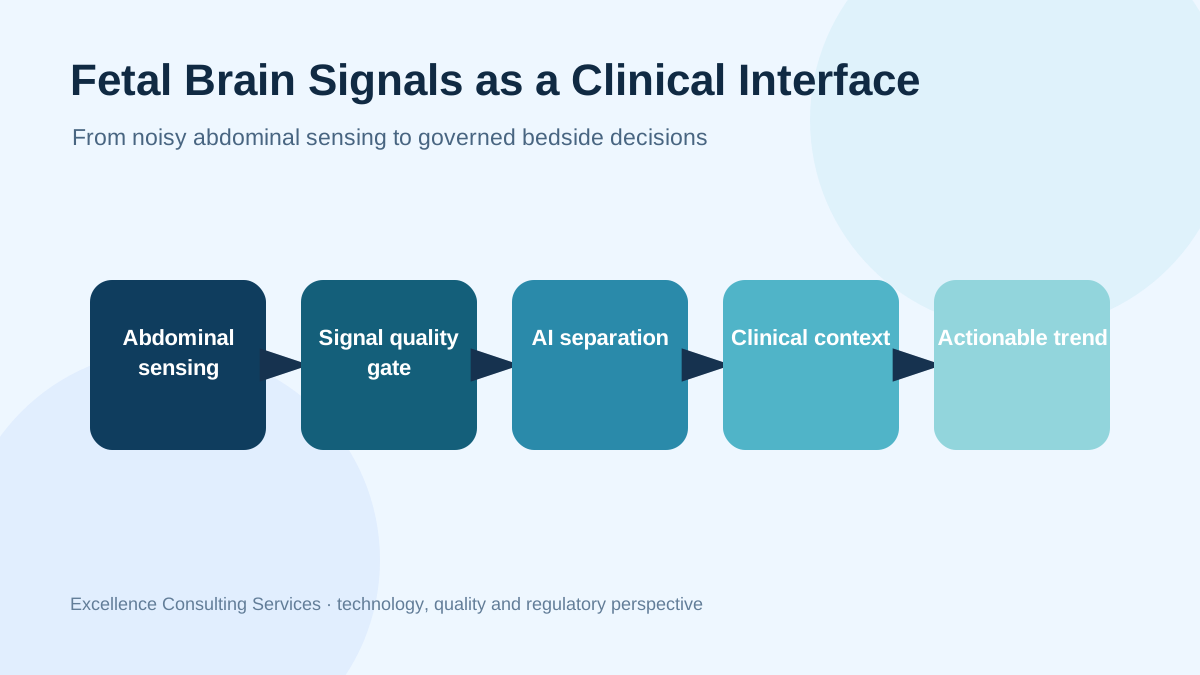
Regulatory Pathways for a Real-Time Fetal Brain Interface
A real-time fetal brain interface would immediately raise regulatory questions. Is it a monitor, an adjunctive decision-support tool, a diagnostic device, an AI-enabled software function, or a combination product-like system of sensors, software and clinical workflow? The answer depends less on the technology label and more on the intended purpose, claims and way clinicians are expected to use the output.
This matters because regulatory strategy should not be written after the solution is built. For a system that may influence intrapartum decisions, the regulatory pathway shapes the evidence plan, design controls, usability validation, software lifecycle, cybersecurity, labelling and post-market obligations. Teams that postpone this work usually discover too late that their dataset, endpoints or user-interface language do not support the claims they want to make.
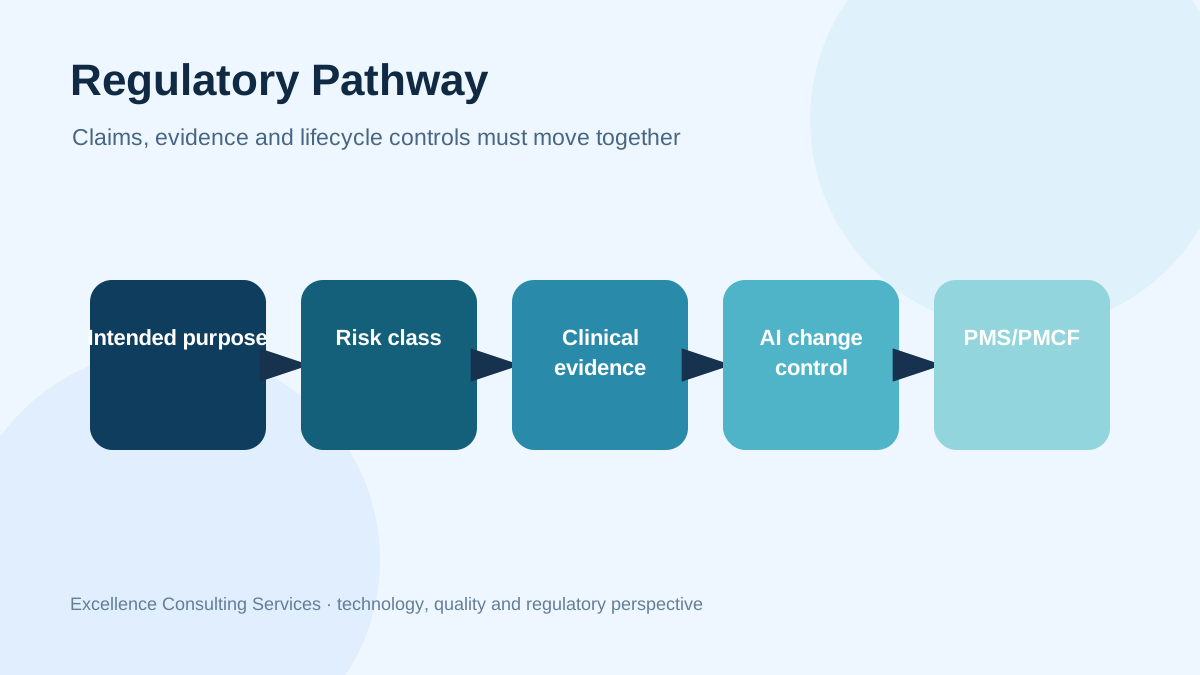
Start with intended purpose and claim discipline
The safest regulatory conversation begins with precise language. “Monitors fetal brain electrical activity” is not the same as “detects fetal hypoxia”, “predicts neurological injury”, or “recommends delivery intervention”. Each step up the claim ladder increases the evidence burden and changes the risk profile. A technically capable system may still need to launch with a narrower claim while evidence accumulates.
Claim discipline also protects the clinical team. If the interface is adjunctive, labelling and training should say so. If it is intended to support escalation, the escalation pathway should be defined. If it is not intended to replace fetal heart-rate monitoring, that boundary must be visible. Regulators, hospitals and insurers will look for alignment between intended purpose, clinical validation, user interface and promotional material.
EU MDR classification and clinical evaluation
Under the EU MDR, classification would depend on the full system configuration and intended purpose. A system providing information used for decisions with potential serious deterioration or surgical intervention implications may fall into a higher software rule category than a passive recorder. If it includes sensors and software as an integrated device, both hardware and software evidence will matter.
Clinical evaluation would need to do more than show signal acquisition. It should establish analytical validity, clinical validity and clinical utility. Analytical validity asks whether the system measures what it says it measures under real conditions. Clinical validity asks whether the measured features correlate with clinically meaningful states. Clinical utility asks whether using the information improves decisions or outcomes without unacceptable harms such as unnecessary intervention.
FDA pathway thinking
In the United States, pathway strategy would depend on predicates, intended use, risk controls and novelty. If no appropriate predicate exists for the claimed use, a De Novo pathway may be more realistic than trying to force substantial equivalence. If the claim is limited and risk controls are strong, a 510(k) strategy might become possible for later iterations or narrower functions. Breakthrough Device designation could be considered only if the technology addresses a serious condition and offers potential for more effective diagnosis or treatment, but designation is not authorization and does not lower the evidence bar.
For AI-enabled functions, FDA expectations around software documentation, change control, human factors, cybersecurity and real-world performance monitoring should be considered early. A predetermined change-control approach may be relevant if the model is expected to evolve, but it must be bounded by validated methods and transparent performance monitoring.
Evidence endpoints are the strategic bottleneck
The most difficult regulatory question may be endpoint selection. Severe neurological injury is clinically meaningful but relatively infrequent, making studies large and expensive. Intermediate markers such as hypoxia, acidosis, Apgar scores, neonatal intensive-care admission or expert adjudication may be easier to collect but must be justified as clinically meaningful. The evidence strategy may need staged claims: first reliable signal acquisition and trend display, then association with clinical states, then demonstrated decision impact.
Regulators will also expect attention to bias and generalisability. Performance should be evaluated across gestational age, maternal characteristics, labour stages, fetal presentation, clinical sites and operator groups. If the system performs well only in ideal conditions, the interface must say so or the claim must narrow.
Post-market surveillance as part of authorization readiness
For this category, post-market surveillance is not an afterthought. It is part of credibility. The organisation must be able to monitor signal-quality failures, algorithm performance, user-interface issues, complaints, adverse events, cybersecurity vulnerabilities and model drift. Hospitals will also want governance: who reviews alerts, how the information enters the record, how training is maintained, and how conflicting signals are handled.
The regulatory takeaway is clear: the novelty of fetal brain monitoring is exciting, but authorization will be earned through disciplined claims, robust evidence and lifecycle control. The technology may be about direct neural signals, but the regulatory case will be about whether those signals are reliable enough, meaningful enough and safely integrated enough to influence care.
