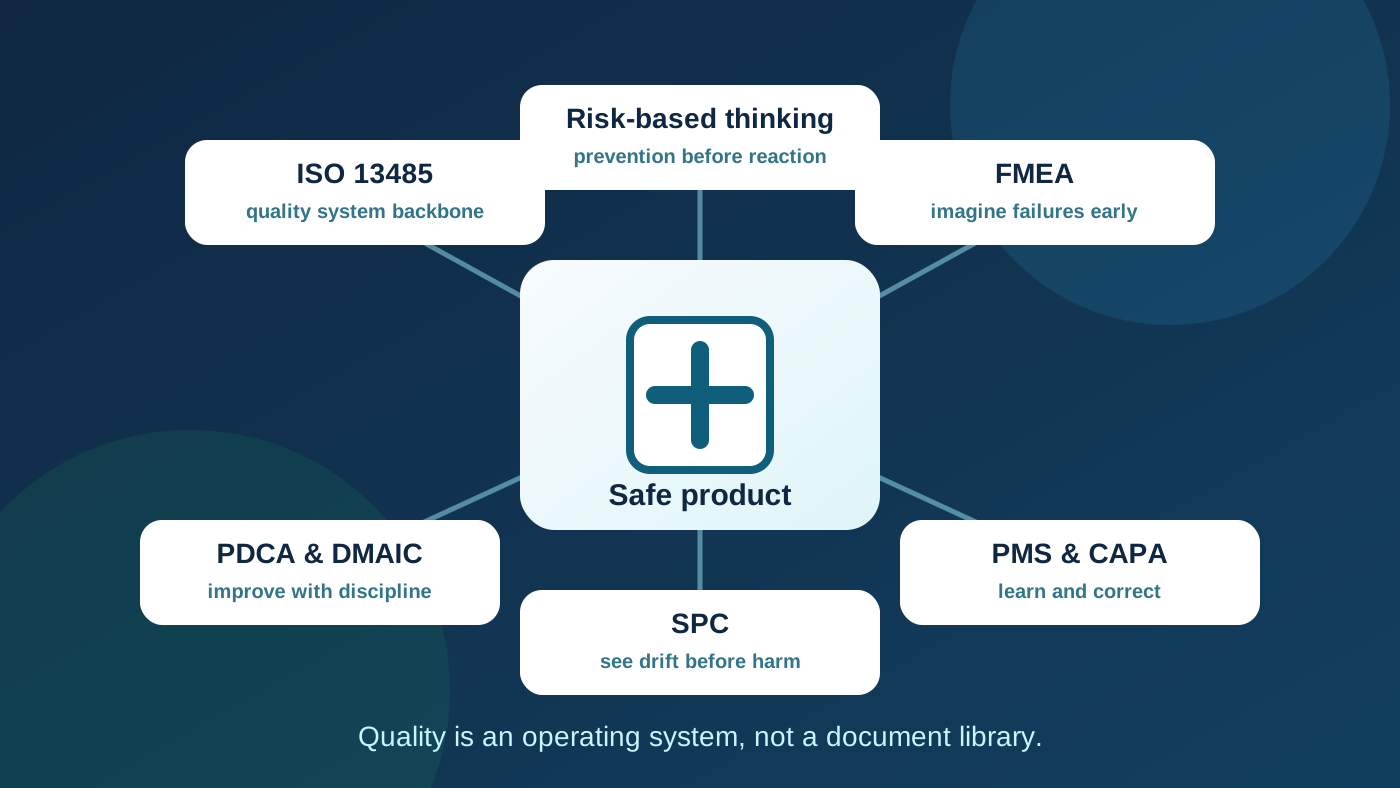
MedTech Quality Management Tools: Useful Only When They Work Together
Quality in MedTech is often presented as a library of procedures, forms and acronyms. That is technically convenient, but operationally dangerous. A quality system is not valuable because the documentation exists. It is valuable because it helps the organisation prevent harm, detect weak signals, correct problems and keep improving without losing control.
The LinkedIn post that triggered this article made a simple point well: quality in MedTech is not just paperwork. It can be the difference between a safe product and a patient-impacting failure. The practical question is what to do with the many quality models available: ISO 13485, DMAIC, PDCA, risk-based thinking, SPC, PMS, CAPA and FMEA.
The mistake is to treat these methods as separate compliance artefacts. In a mature MedTech company they should behave like one connected operating system.
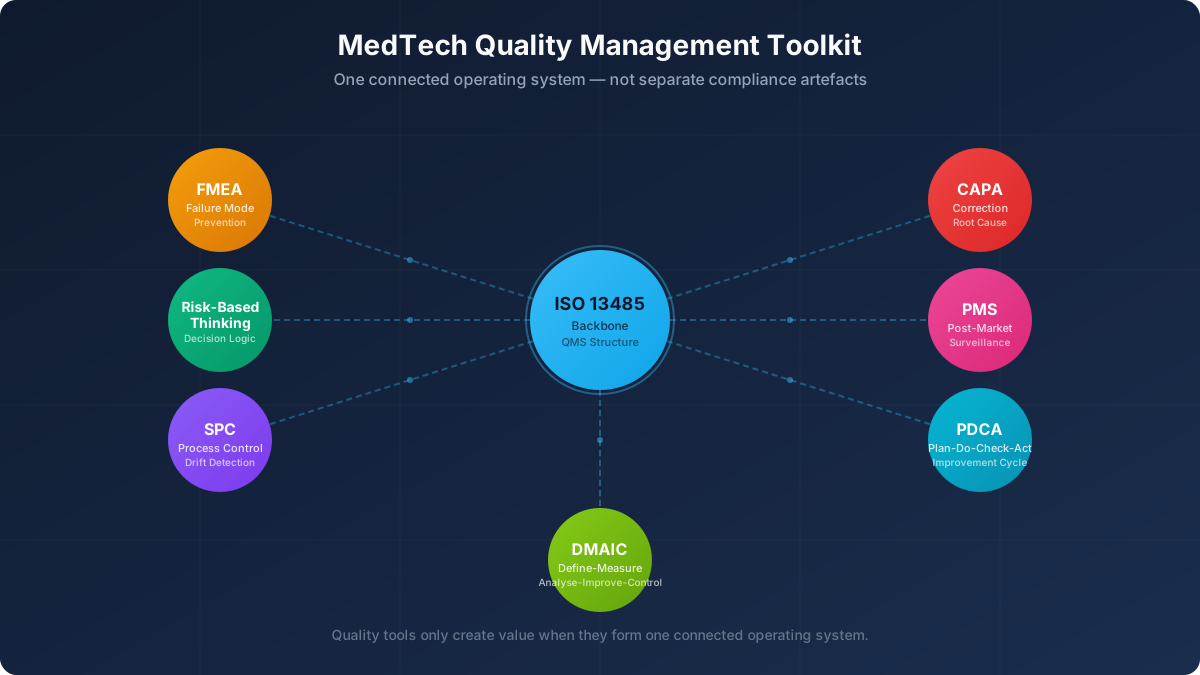
The toolkit is useful, but only if it is integrated
Each quality tool has a role. ISO 13485 gives the management system structure. Risk-based thinking sets the decision logic. FMEA helps teams imagine failure modes before the market teaches them expensively. SPC watches whether processes are drifting. PMS listens to the product in the real world. CAPA turns serious signals into controlled correction. PDCA and DMAIC give improvement work a disciplined rhythm.
None of these tools is magic in isolation. An FMEA that is not connected to design decisions, complaints, nonconformities and CAPA is theatre. CAPA without good problem definition becomes bureaucracy. PMS without escalation logic becomes a mailbox. SPC without ownership becomes a dashboard nobody uses.
ISO 13485: the backbone, not the whole body
ISO 13485 is rightly seen as the gold standard for medical device quality management systems. It provides the backbone: management responsibility, resource management, product realisation, measurement, analysis and improvement. But a backbone alone does not move the organisation.
The standard becomes powerful when the procedures are connected to real decisions. Design changes, supplier controls, software releases, complaints, production deviations and post-market findings should not live in separate administrative worlds. They should feed each other.
Risk-based thinking: prevention before cure
Risk-based thinking is the quality system’s practical conscience. It asks: what can go wrong, how severe would it be, how likely is it, how detectable is it, and what control is proportionate?
For MedTech teams this should not be limited to the risk management file. It should influence supplier qualification, verification depth, validation strategy, cybersecurity work, clinical evidence, post-market monitoring and management review. If risk thinking appears only during audits, it is not thinking. It is decoration.
FMEA: useful when it changes behaviour
FMEA is valuable because it forces a team to imagine failure before reality does. Used well, it surfaces weak assumptions, fragile process steps and design vulnerabilities early enough to act.
Used badly, it becomes a spreadsheet completed after the design is already frozen. The test is simple: did the FMEA change a requirement, control, verification activity, process parameter, supplier requirement or monitoring plan? If not, it probably did not create much safety value.
SPC: numbers that warn before they accuse
Statistical Process Control is not just a manufacturing tool. It is a way to see whether a process is stable enough to be trusted. Trends, variation and drift often appear before formal nonconformities do.
That matters because MedTech quality work should not wait for failure. A process that is still within specification may already be moving in the wrong direction. SPC gives teams a chance to intervene before the deviation becomes expensive or unsafe.
PMS and CAPA: the learning loop
Post-market surveillance is the organisation’s eyes and ears after release. Complaints, service data, adverse events, user feedback, literature, regulatory signals and competitor issues all help answer the question: is the product still safe and performing as intended?
CAPA is the disciplined response when the signal is serious enough. Its purpose is not to close records quickly. Its purpose is to understand root cause, correct the problem, prevent recurrence and verify that the action worked. A fast CAPA closure with weak evidence is just postponed risk.
PDCA and DMAIC: improvement with adult supervision
PDCA is simple: plan, do, check, act. DMAIC adds a stronger analytical structure: define, measure, analyse, improve, control. Both are useful because they protect improvement work from enthusiasm without evidence.
In MedTech, improvement must be controlled. Better is not better if it invalidates a process, changes intended use, creates regulatory exposure or hides a new hazard. These methods help improvement remain measurable, documented and safe.
What this means for leadership
Executives should not ask whether the company “has” these tools. The better questions are sharper:
- Do signals flow? Do complaints, deviations and supplier issues feed the right risk and CAPA processes?
- Are decisions risk-based? Can teams explain why one issue was escalated and another was monitored?
- Do tools change outcomes? Do FMEA, SPC, PMS and CAPA actually change product, process or control decisions?
- Is ownership clear? Does each quality signal have a responsible person and a defined path to action?
- Is effectiveness verified? Do improvements stay improved after the CAPA or project is closed?
My view
The most mature quality organisations do not worship methods. They use methods to make better decisions. ISO 13485, FMEA, CAPA, PMS, SPC, PDCA and DMAIC are all useful, but only when they reinforce each other.
Quality should feel less like a document factory and more like an early-warning and learning system. It should help teams see risk sooner, respond with proportionate discipline, and improve without losing regulatory control.
Conclusion
MedTech quality is complex because the stakes are high. The answer is not to use every tool everywhere. The answer is to build a coherent system where each tool has a purpose, an owner and a connection to real decisions.
When that happens, quality stops being paperwork. It becomes a practical way to protect patients, protect the company and keep innovation moving safely.
